Antacid, a glass of warm water, a burp, and it settles. So it was gas — wasn't it?
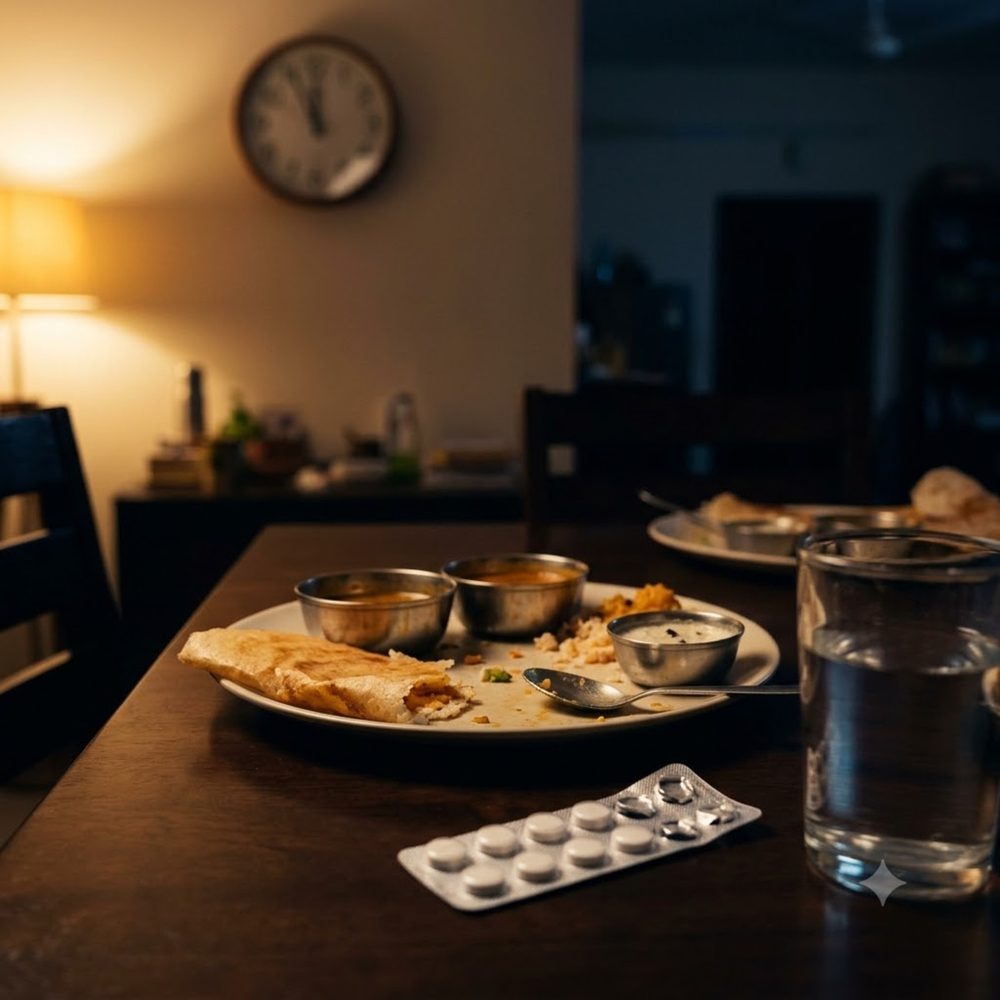
Sometimes yes. But acidity and cardiac pain sit in the same part of the chest, and both can ease with rest, warm water, or even a burp. That overlap is exactly why chest discomfort is the one symptom you should not diagnose for yourself at home.
Why the confusion is so common
The heart has no precise pain map. Its nerve signals travel in the same bundle as those from the food pipe and stomach, so the brain often cannot tell you which organ is complaining. A tight band across the chest after a heavy dinner is a genuinely ambiguous signal — not a sign you are overreacting.
Patterns that lean towards acidity
- Burning that rises upward behind the breastbone, often with a sour taste in the mouth
- Clearly worse on lying down or bending forward, better sitting up
- Related to specific foods and to skipped or very late meals
- Same discomfort at rest and on walking — effort makes no difference
Patterns that lean towards the heart
- Heaviness, pressure or squeezing rather than burning — many people describe a weight, not a pain
- It appears with effort — climbing stairs, walking to the bus stop, carrying groceries — and eases within minutes of stopping
- It spreads to the left arm, both shoulders, jaw, upper back or throat
- It comes with cold sweating, unusual breathlessness, nausea or a sense of doom
- The threshold is dropping — what needed two floors last month now appears on one
The single most useful clue is that last pattern: discomfort that reliably tracks exertion and reliably settles with rest.
Two groups who get missed most often
People with diabetes, in whom the nerves that carry warning pain are blunted, so a heart attack may present as only breathlessness, sudden sweating or vomiting. And women, whose symptoms are more often breathlessness, extreme fatigue, jaw or upper-back discomfort rather than classic chest pain. In both groups, "it can't be the heart, there was no real pain" is a dangerous conclusion.
What to do in the moment
If chest discomfort is severe, lasts more than 10–15 minutes, comes with sweating or breathlessness, or wakes you from sleep, treat it as an emergency. Go to the nearest hospital with a cath lab — do not drive yourself, and do not wait to see if an antacid works. Time is heart muscle: the first hour matters more than anything a doctor can do later.
What to do about the discomfort that keeps coming back
A single ECG in the clinic takes a couple of minutes and gives a clear starting point. Depending on what it shows and what your risk factors are — blood pressure, diabetes, cholesterol, smoking, family history of early heart disease — the next step may be an echocardiogram, a stress test, or simply reassurance and treatment for reflux. Getting that sequence right is what stops years of alternating between an antacid and anxiety.
If a stomach medicine has been "working" for months, that is not proof the heart is fine. It is a reason to check once, properly, and be done with the question.